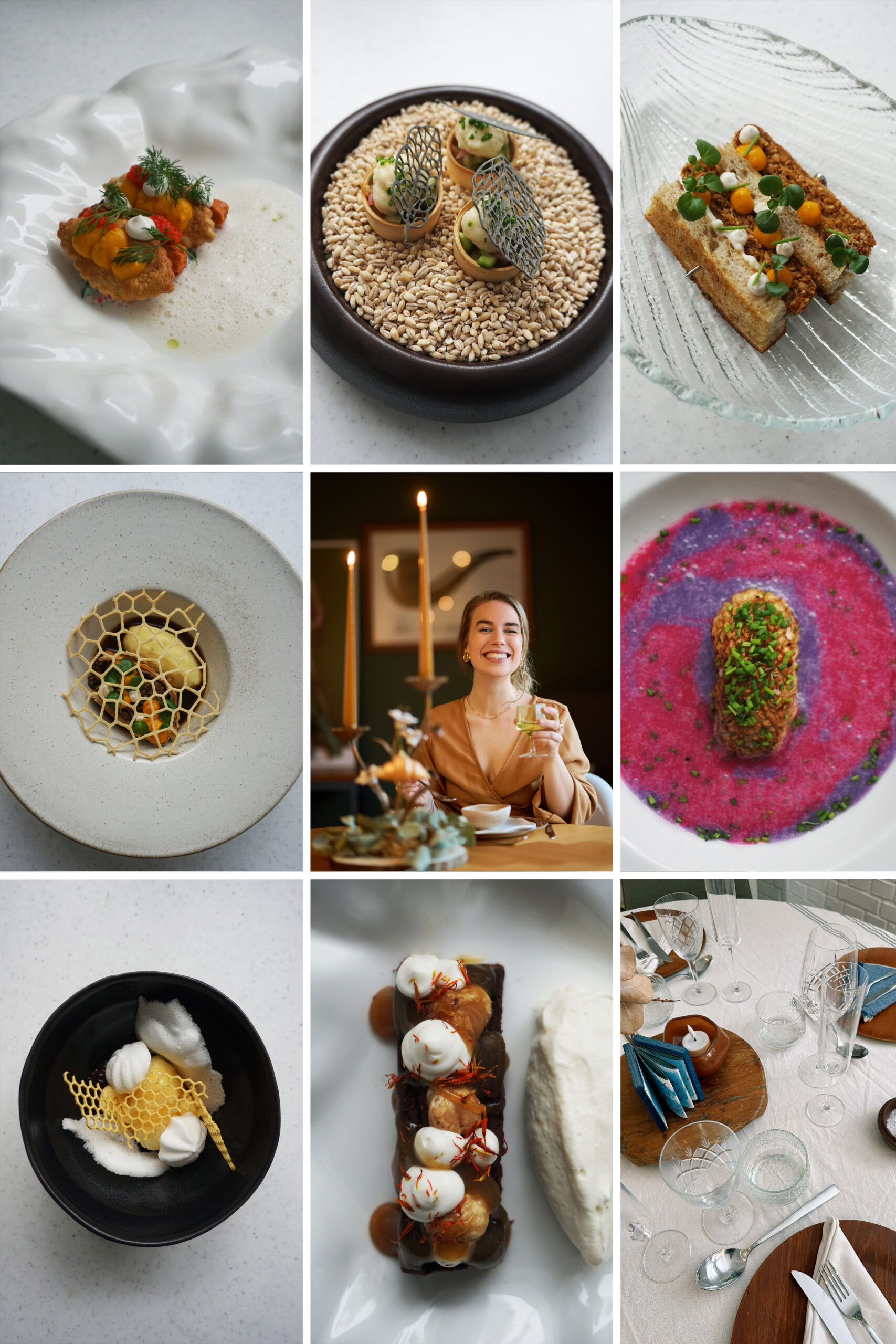
I recently served my first 7-course dinner of 2026, and I was so excited to get back into fine dining, so I might have done a bit overboard with this one. If this feels like a lot of work for one person to do for a dinner, it is because it is. This took me two days to prepare, ngl. But in the end, it was so worth it. There are also many of these elements that you can prep several days in advance to make the workload less extreme. I also recommend saving some time, effort, and money by “recycling” ingredients throughout the menu. I reused the same ingredients and elements in multiple dishes, which not only made the workload smaller but is also an essential part of more sustainable cooking techniques. That’s why you’ll see the same purées throughout the menu. As well as celeriac being a component that is repeated again and again, but it’s tasty, so I consider that a win-win.
I’ll take you through the most prominent elements of the dishes in this post and hopefully this will inspire you to cook more plantbased dishes, also for more special and fancier occassions. If you want more resources, you can also find my book, available in Danish: Bæredygtig Gourmet.

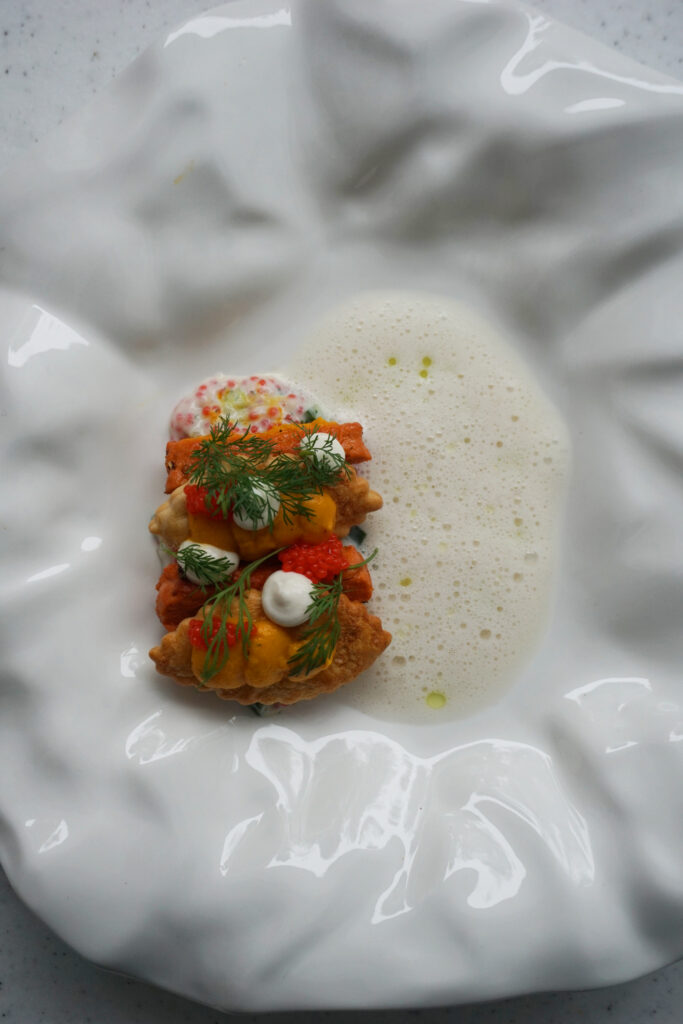
1st dish: An Ode To The Sea
The first dish consists of a vegan salmon from Revo Foods, a silken tofu creme with dill and fresh cucumber, some flakey pieces of pie crust, seaweed caviar, a white sauce, a green oil, a carrot purée, vegan creme fracihe and dill. The sauce is made using the leftover liquid from the celeriac purée which you will find the guide for down below.


Purée guide
- 200 grams of produce, here carrot and celeriac
- 200 ml oat milk
- 100 ml plantbased cream
- 75 g plantbased butter
- Salt and pepper to taste
Wash, peel, and cut your veggies, into small cubes. The smaller they are, the faster they cook. Place them in a pot with oat milk and plantbased cream and bring to a slow boil. Let it simmer for 30-45 minutes.
When the root of celery is completely softened, take the pieces out of the pot and add them to a food processor. Remember to save the liquid for the sauce later. Process briefly, before adding your cold plant-based butter. Then process until smooth. If you want your purée thinner, you can add a bit of the milk/cream mixture from the pot (otherwise it is great in sauces and soup,s so save it).
When the purée is as smooth as it gets, run it through a strainer to get that final extra smooth finish. Then transfer the puré to a squeeze bottle and refrigerate until serving.
2nd dish: One Bite Croustade
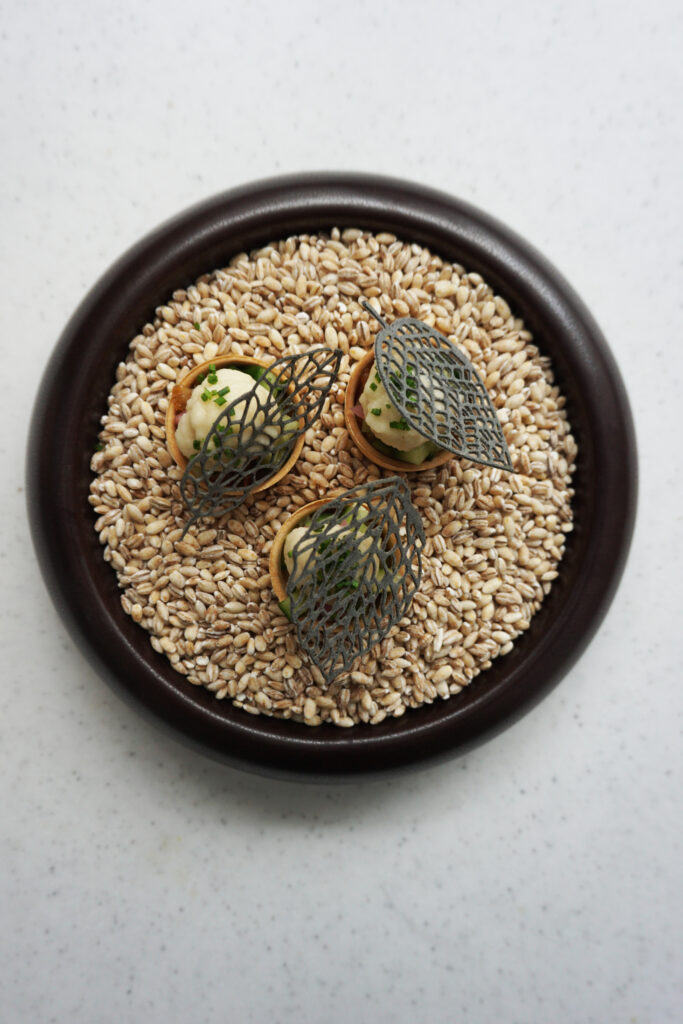
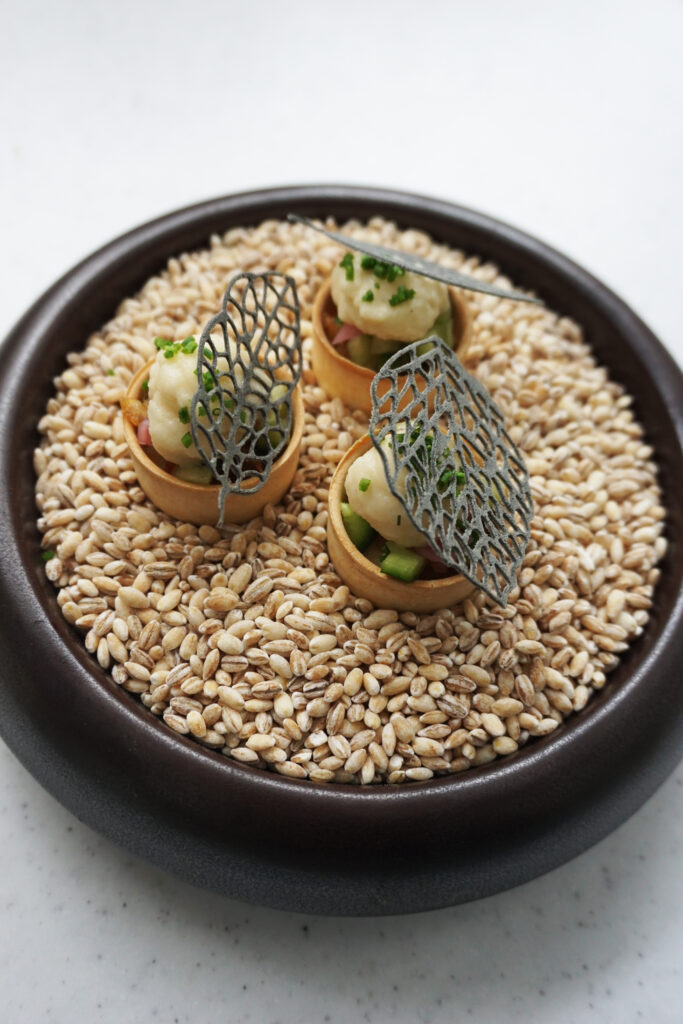
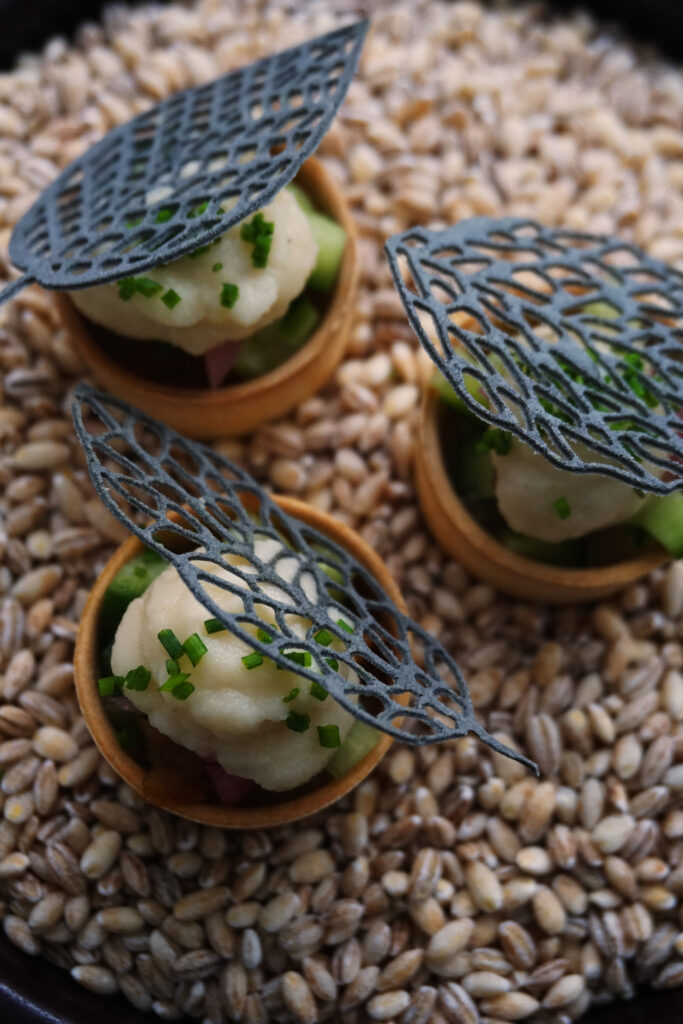
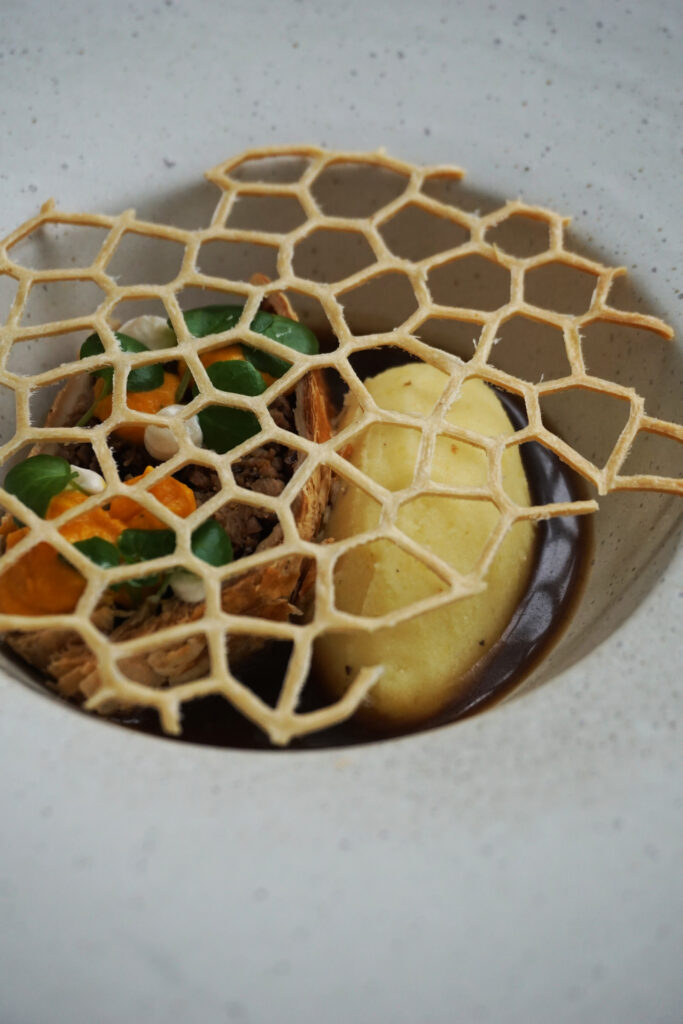
The courstade here, that is the edible bowl, I didn’t make myself, just fyi. It contains a pieces of fried vegan chicken, a celeriac purée, fresh cucumber pickled red cabbage and a tuille.
Tuille
- 2,5 tbsps of flour
- 1 tsp of sugar
- ½ tsp of salt
- 2 tbsps of oat milk
- 1 tsp of powdered egg replacer + 1 tbsp of oat milk
- Add additional colouring agents like charcoal, tumeric etc, for colour and additional flavour
Set your oven to 180 degrees C. Mix your dry ingredients in a bowl and mix together, then add your wet ingredients. Add only 1 tsp of leek ash to the batter and save the other one for a little bit. Once the batter is consistent and smooth, transfer it to a silicone baking mould.
With a spatula, smooth out the batter into the mould, making sure that no excess batter is left to mess up the pattern.
Bake for 3-4 minutes, and remove the tuille from the mould quickly while it is still warm, this way, you’ll have a higher chance of keeping the tuille intact. Let them cool before carefully placing them on your dish before serving.
3rd dish: Soy-Based Katsu Sandwich
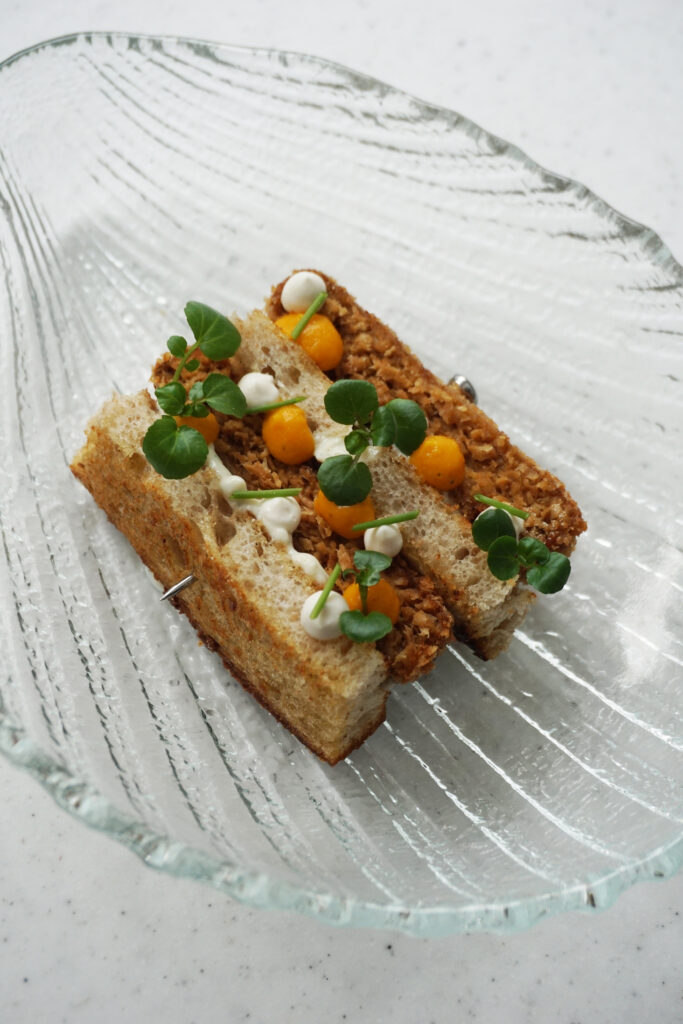
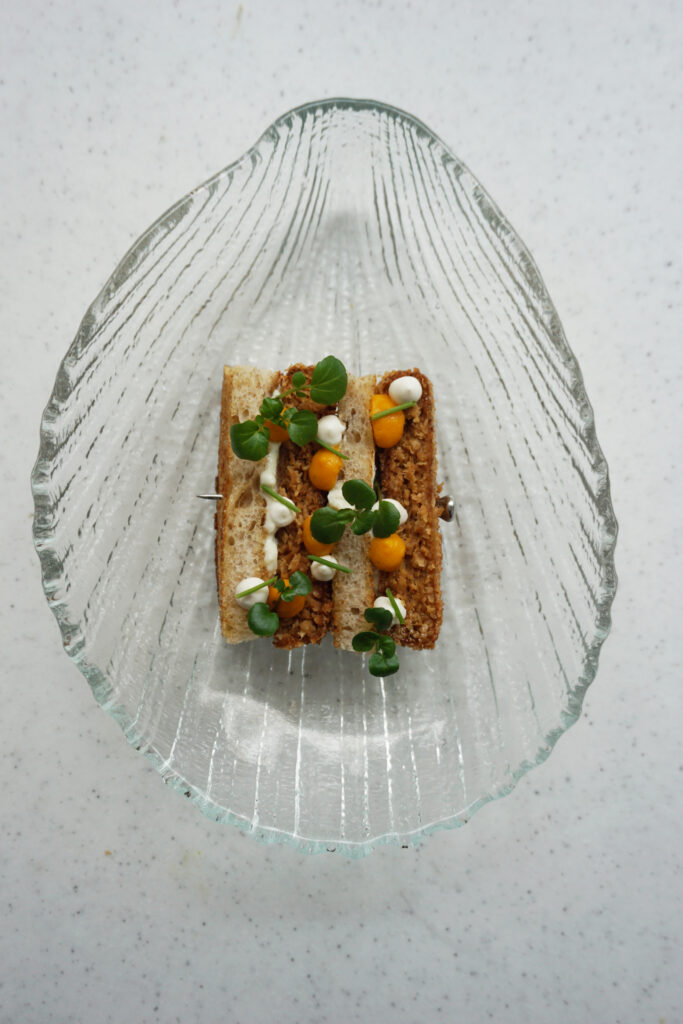
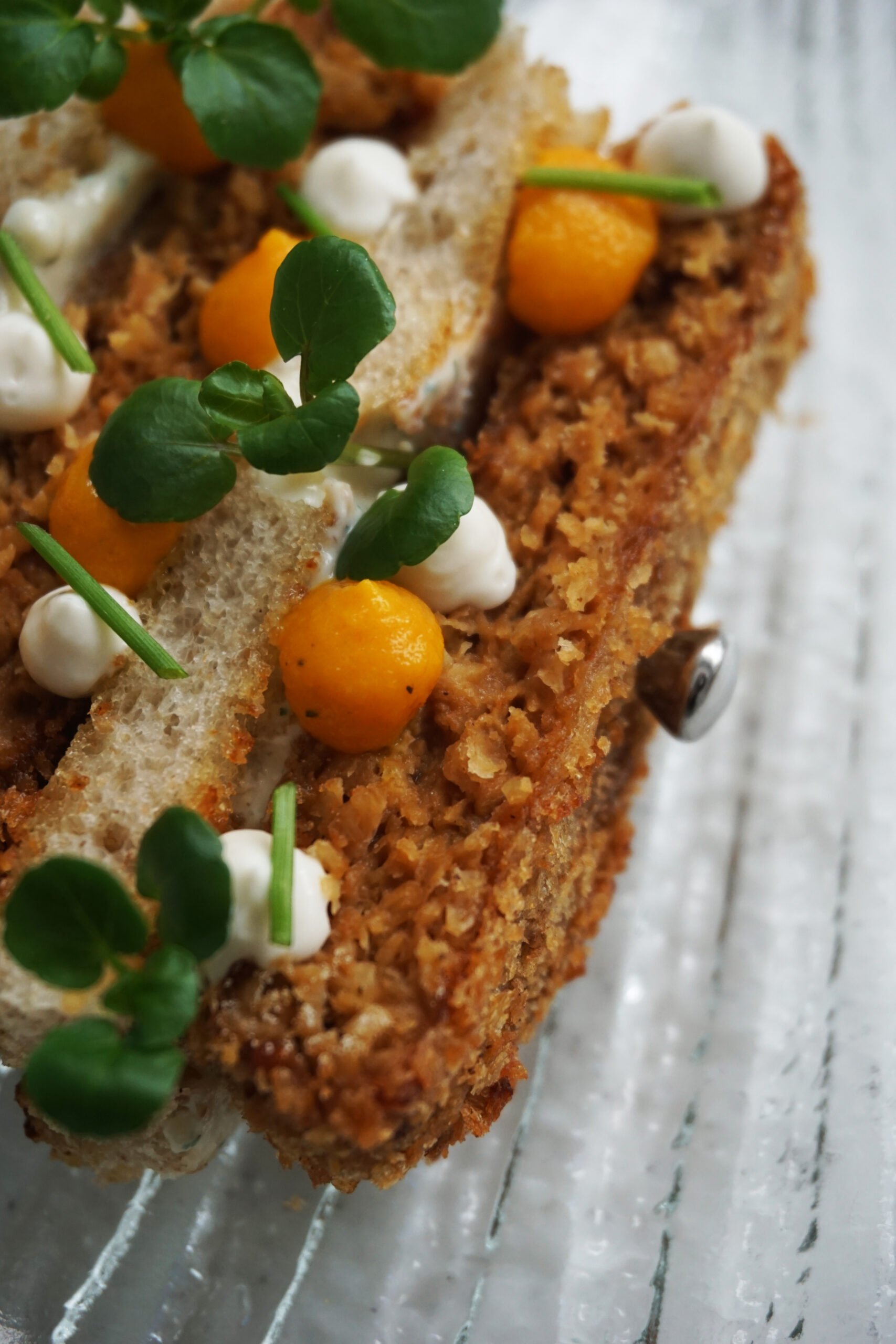
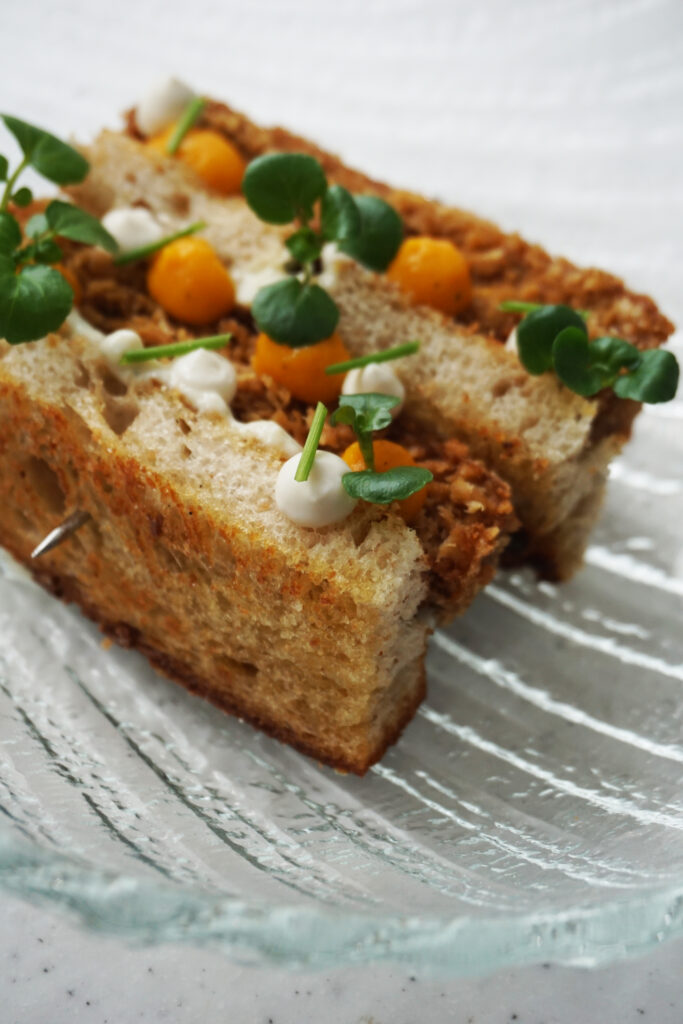
This dish consists of toasted sourdough and a soy mince covered in panko breadcrumbs and deep fried, served with carrot purée, creme fraiche and fresh greens. The slices of toast have a layer of the silken tofu creme with dill and cucumber.
The soy mince used is from Naturli, comined with paprika, garlic, salt and pepper to taste. The covered in a batter and fried in panko like in this recipe.
4th dish: Wellington And Shiitake Reduction
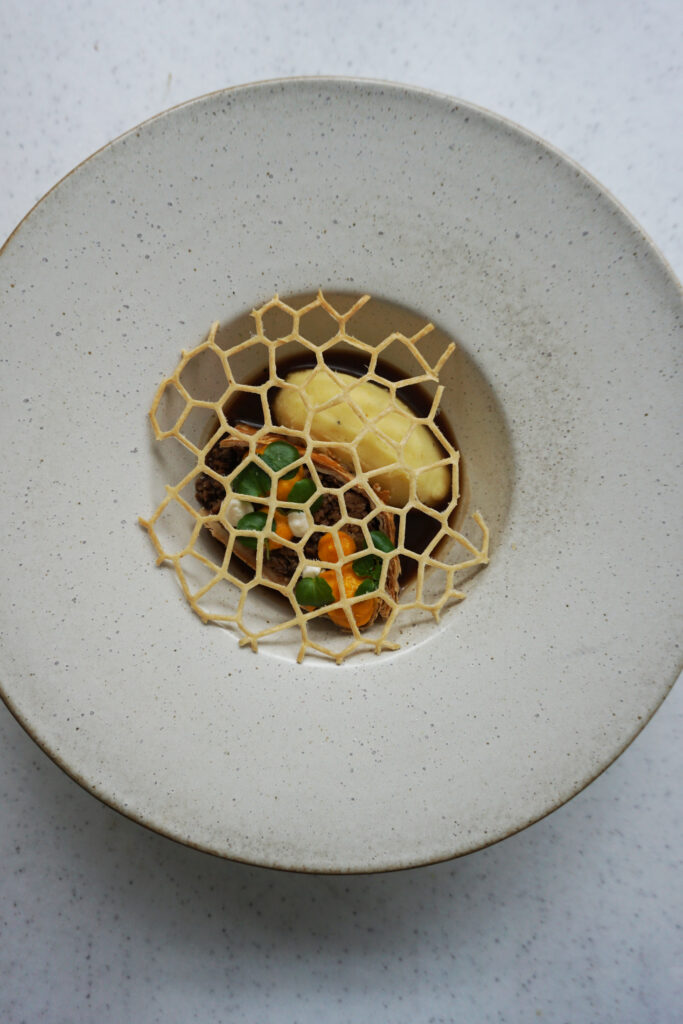
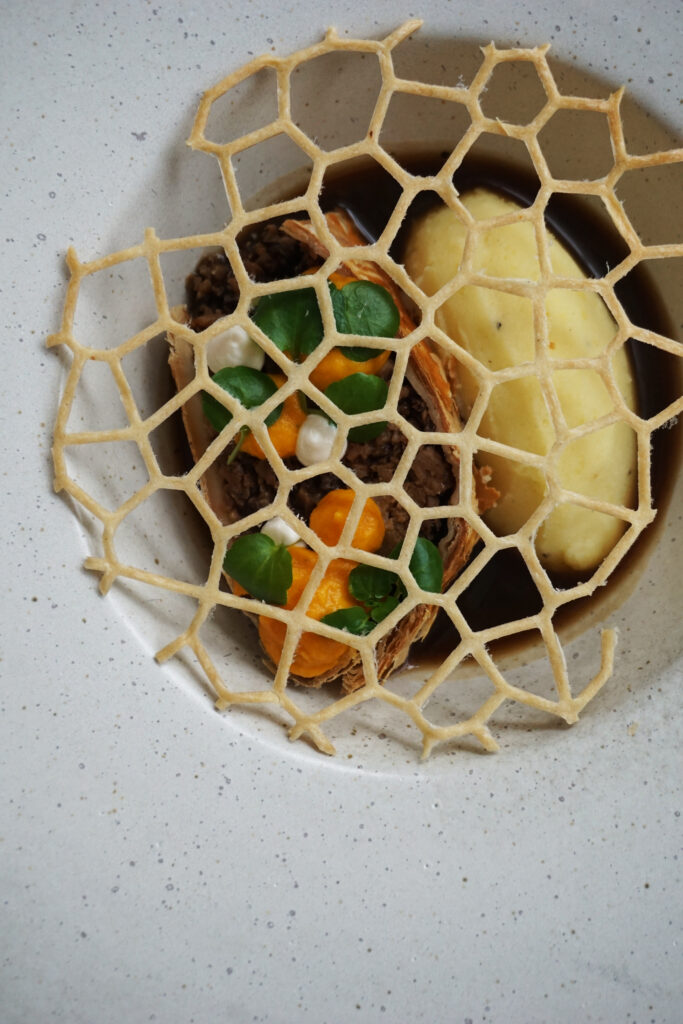
The first thing I did with this dish was making the shiitake reduction. Golden tip: dehydrate your own mushrooms, or buy dried ones, when rehydrating them the flavour will be so much more intense. I added 200 grams of dried mushrooms to a pot and covered with water. I also added some seasame oil, smoked salt and liquid smoke to the pot and let it lightly simmer for 2 hours. Afterwards I strained the liquid from the mushrooms and saved the liquid for the reduction (which I made by further letting it simmer, and at one point whisking in a teaspoon of corn starch). The mushrooms I roasted briefly and then added them to a blender along with some soy mince for the wellington.
Mushroom Wellington
- 2 shallots
- 100 grams of mushrooms
- 200 grams of plant-based minced meat (used Naturli’ Shape Me Minced, but you can also use soy granulates or tofu)
- 1 ½ tsps. of liquid smoke (also use smoked paprika or other herbs and spices of your liking)
- 50 ml of red wine
- 1 roll of puff pastry dough
- Salt and pepper to taste
Finely chop the shallots and mushrooms while preheating a skillet on medium heat. Start by sautéing the shallots in olive oil. Once they are translucent, add the mushrooms and cook until they stop releasing water. Then add liquid smoke, red wine, or other preferred herbs and spices. Once the filling is combined and cooked through, transfer it to a bowl to cool. I recommend letting the filling cool to avoid heating up the puff pastry dough. Place your filling along the inner centre of the dough and cut strands of dough on each side. The Wellington will be closed with a braid. Start by placing one strand from one side on top, then add one from the other side. Continue roasting until you have a nice braided pattern. Alternatively, you can roll the dough around the filling for a smoother and cleaner finish if you don’t want to braid it. I personally like this method because it makes for a crisper, flakier dough. Brush with melted plant-based butter. Place in the oven at 180 degrees C for about 20 minutes, or until golden brown.
5th dish: Celeriac Roast and Colour-Changing Sauce
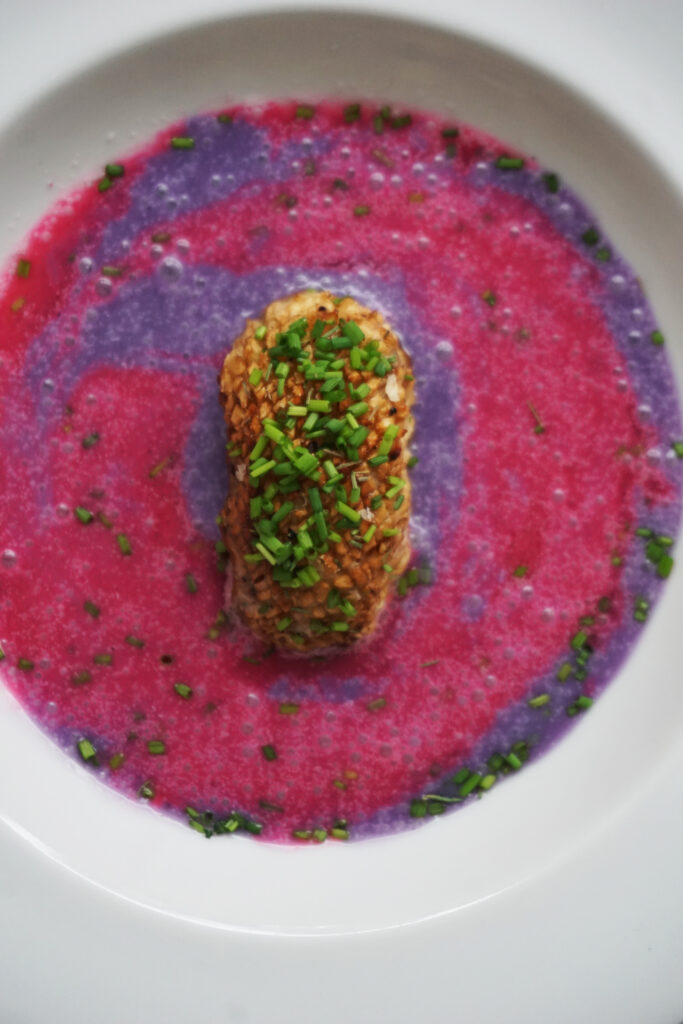
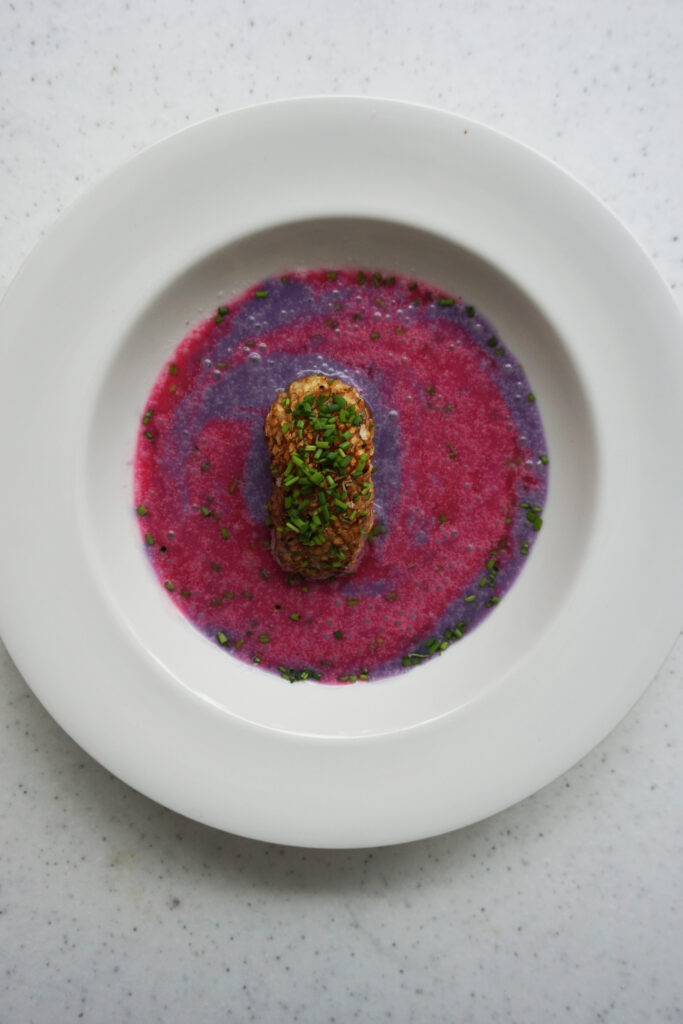
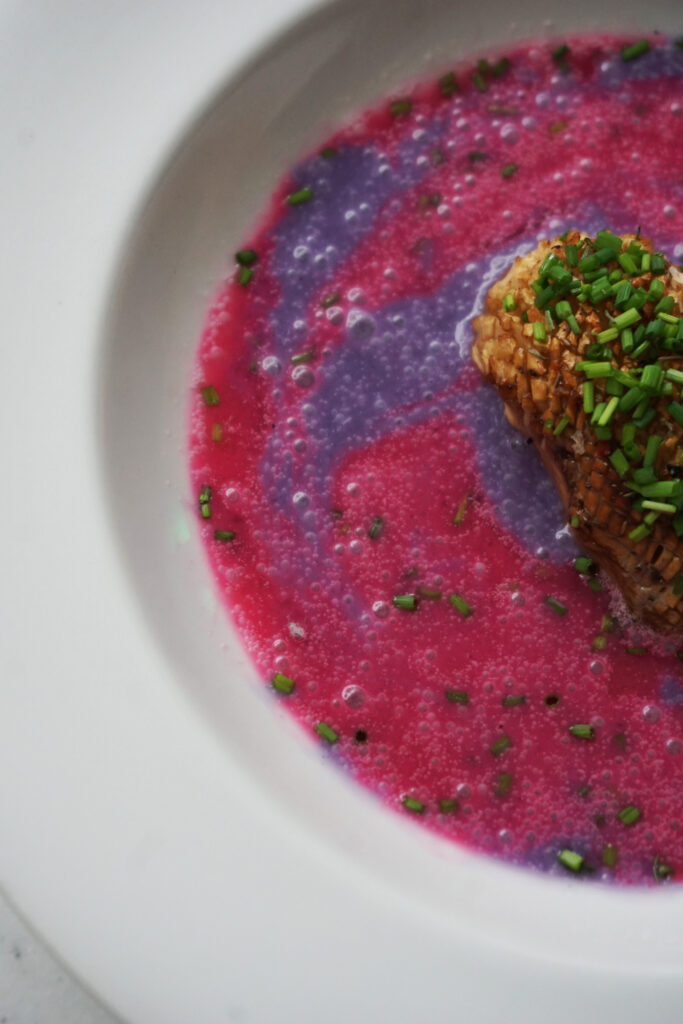
I used this recipe in my book as wekk, because I absolutely love this reaction; it’s so fun and playful. I served the colour-changing sauce with a piece of roasted celeriac, and sprinkled with chives.
Colour-changing sauce with red cabbage and lemon
- 200 grams of red cabbage
- 300 ml of oat milk
- 300 ml of oat cream
- Powdered vegetable bouillon
- Truffle oullion
- Nutmeg, salt and pepper to taste
- Lemon juice on the side
Start by cutting your raw red cabbage into smaller pieces, then add them to a pot and cover with 50/50 oat milk and vegan cream. Bring to a boil, then reduce the heat and let it simmer on low heat for 40 minutes. Remove the red cabbage (and save it for a purée, or a stock, etc.) and focus on the liquid. Remove about 1 dl and mix with corn starch, then whisk the mixture back into the sauce to thicken it. Add vegetable bouillon, nutmeg, pepper and salt to taste. I also added some powdered truffle bouillon for an additional dimension of flavour. Serve with a side of fresh lemon juice and let the guests create the colour shift.
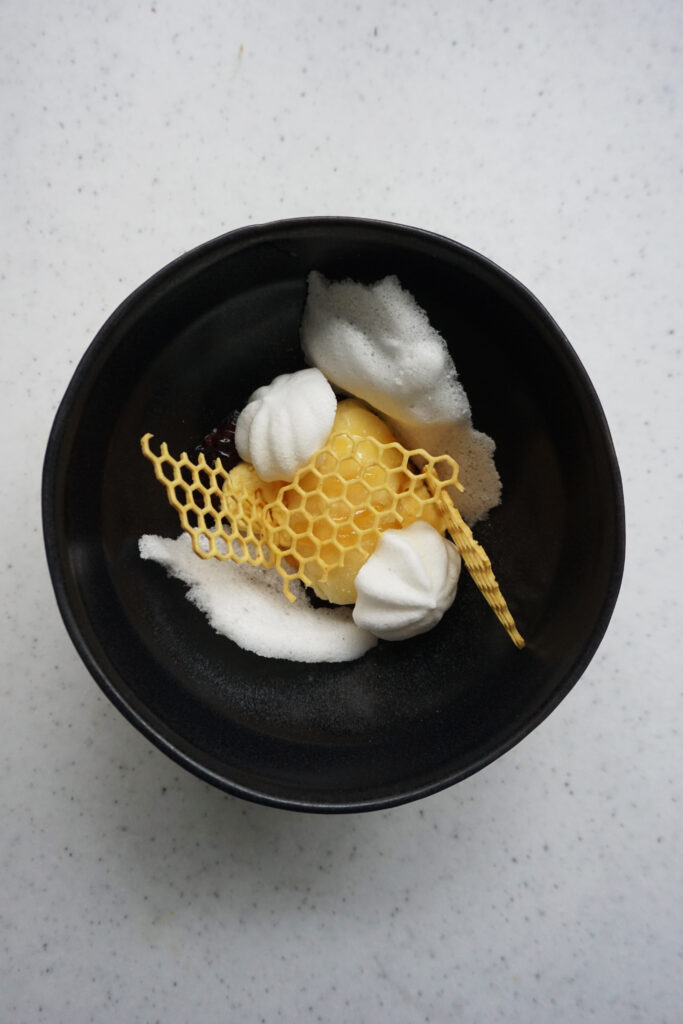
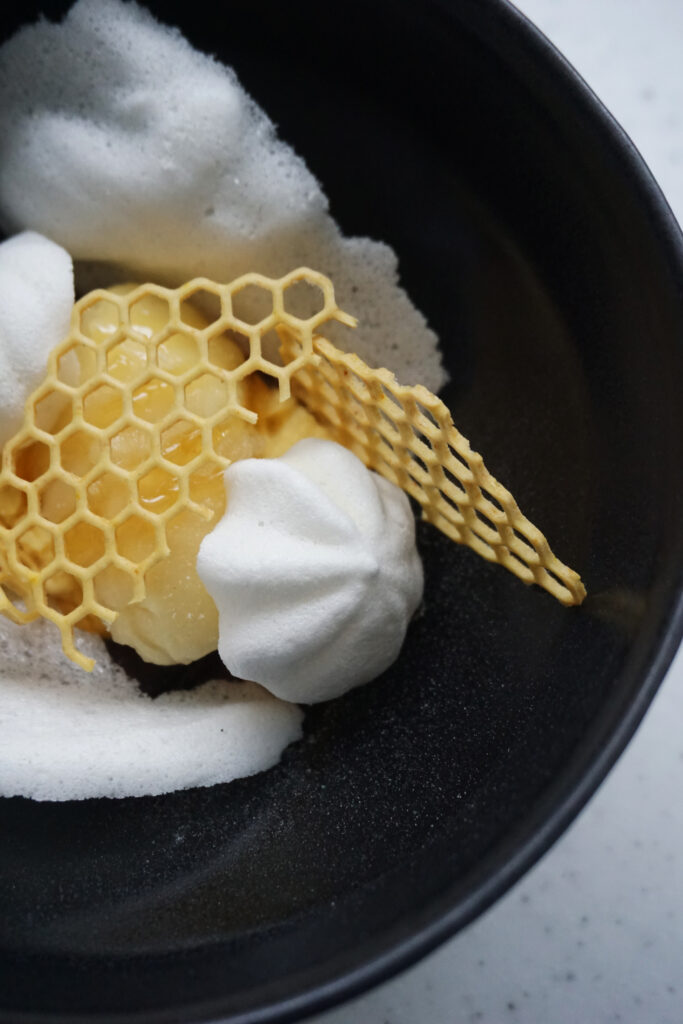
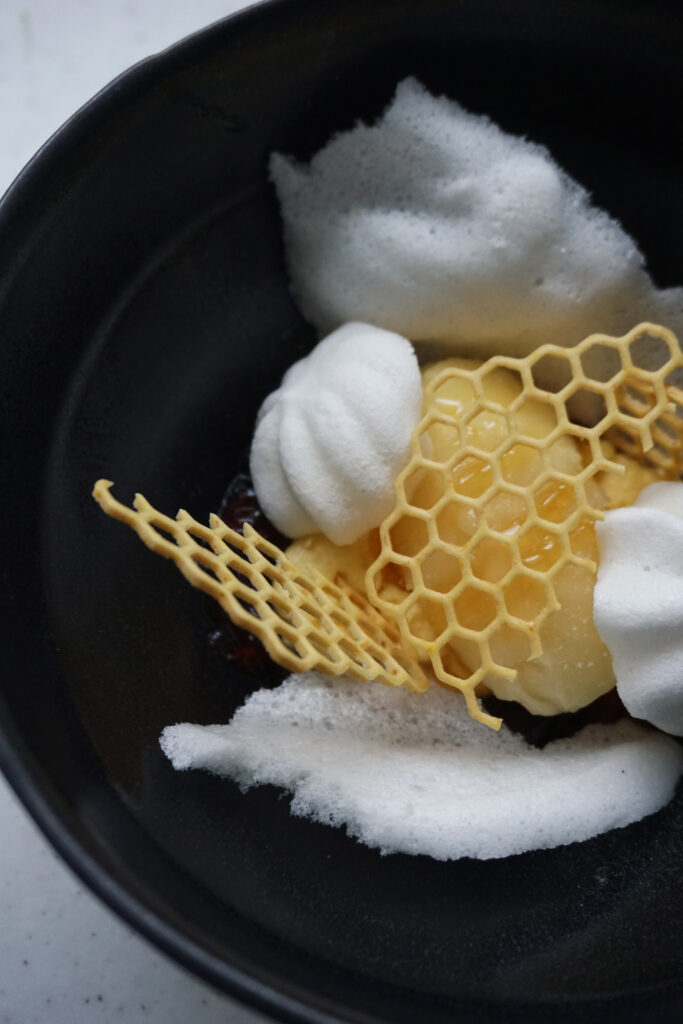
6th dish: Lemon Sorbet and Merengue
My confession here is that I didn’t make the sorbet myself, I priorities other elements, and bought a high quality sorbet instead. Instead I made the merengue and let me tell you how.
Take the water from a can of chickpeas and reduce it about 20% on the stove, before adding it to a mixer. Make sure, to whipe everything off thoroughtly, the whisk, the bowl etc, even the slightest bit of moisture can ruin the consistency. I used my electric mixer for this, on high speed for 10-12 minutes. Once you start to see an airy consistency in the merengue start added 1 tablespoon of powdered sugar at a time, wait 30 secounds, then add another. I added 4 tablespoons of powdered sugar in total. Once the merengue is nice is fluffy you can use it as is, you can add flavour or you can bake it. Set your oven to 100 degrees C and spread the merengue evenly on a baking sheet (or pipe them into small peaks, both works) and bake them for 1,5 hours. Then turn off the oven but don’t open the oven. Let the oven cool completely, by then, the merengue should have dried completely. Transfer to an air tight container. If it is left out in the air where moisture can get to it, it will become super sticky. I broke off parts of the sheet and used as garnish, along with a few peaks of dried merengue on each place.
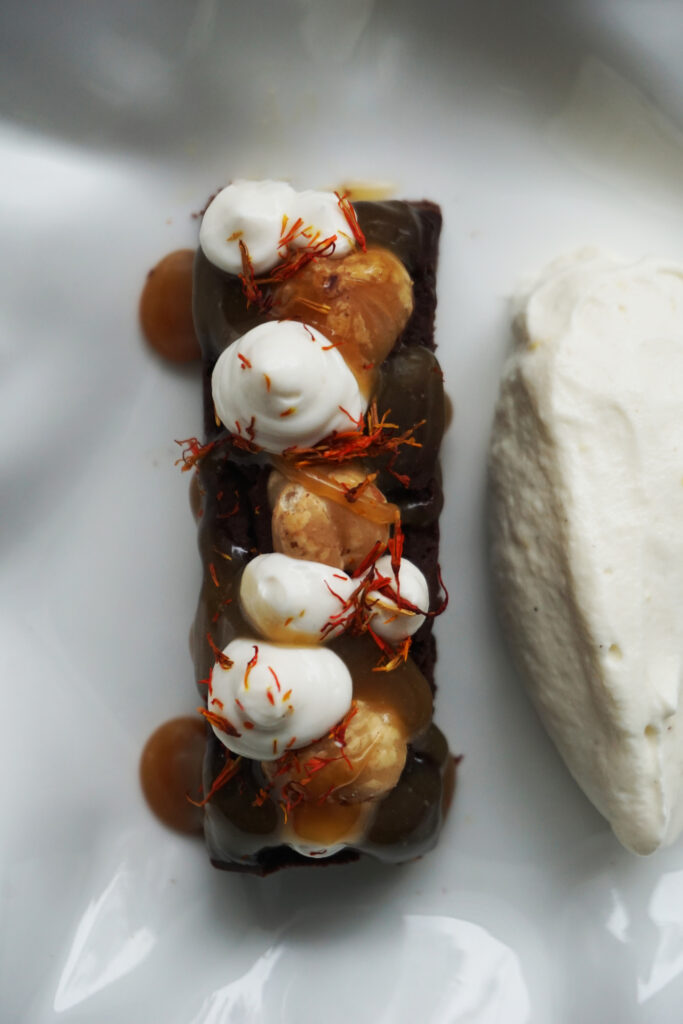
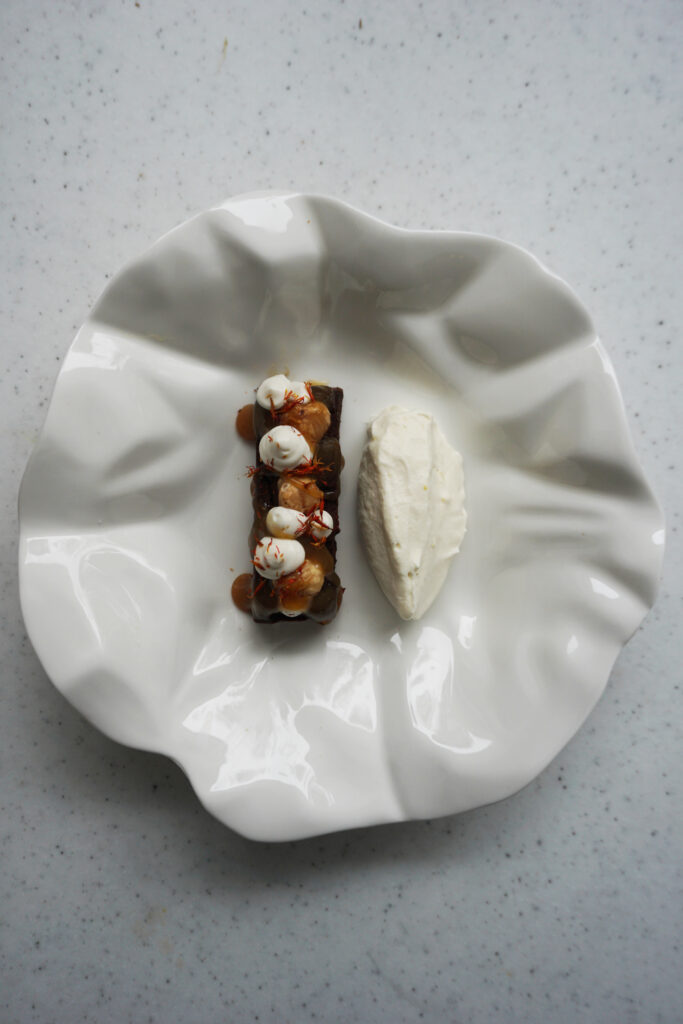
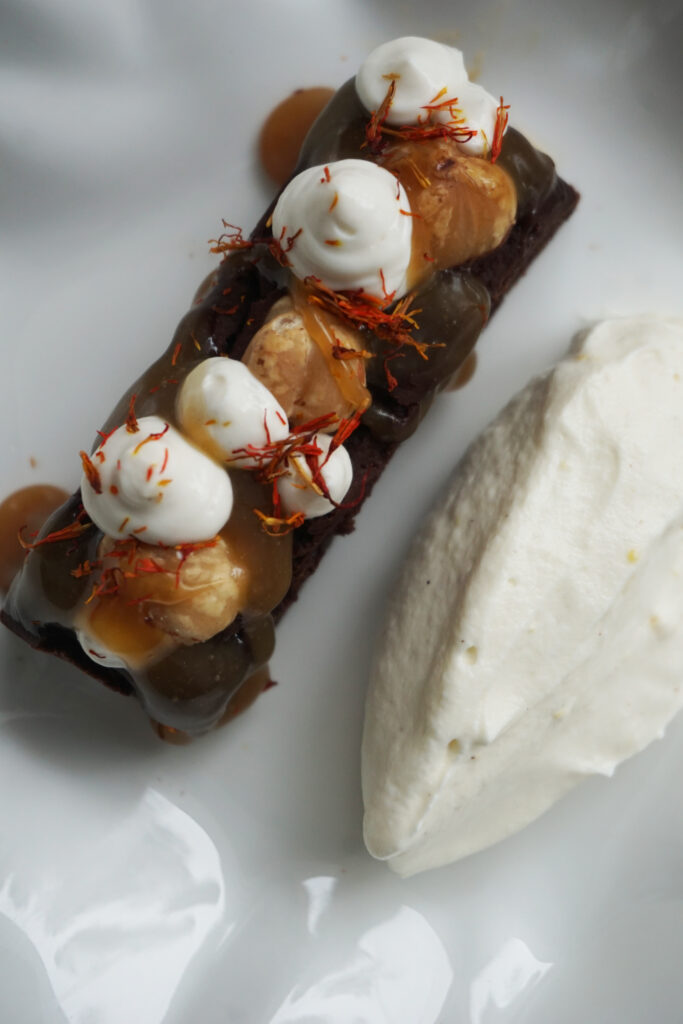
7th dish: Black Bean Brownie with Salty Caramel
This dish contains beans for the simple reason that I had them in my fridge and thought “why the hell not”, they create a heavy cake, so it can be a good idea to balance it with some acidity. I made a creme on the side and added plenty of lemon to cut through some of that heaviness. Find the recipe for the creme here . The caramel is made with just sugar, salt, vegan butter and some cream. Add the sugar (I used about 300 grams) to a pan on medium heat and don’t touch it before it starts to melt. It’s a patience game. Once the sugar starts to melt, add 100 grams of butter and mix it together. Reduce the heat to low and keep stirring while it combines, very trust-the-process. Once the caramel feels even and without lumps, add in the cream (about 150 ml) and let it cool.
Black bean chocolate cake
- 1 can of black beans
- 2 tbsp egg replacement / or flaxseeds
- 1,5 dl of black coffee
- 2 tbsp of vegetable oil
- 50 g of nut butter (I used peanut butter)
- 1 dl of cocoa powder
- 1 dl of flour
- 1 dl of sugar
- 1 tsp baking powder
- A pinch of salt
- 1/4 tsp espresso powder (optional)
- 75 g dark chocolate
Start by preheating your oven to 180 °C (350 ° F), draining and rinsing the beans, then add them to a food processor. If you’re using powdered egg replacement, mix it with some plant milk to get the proper consistency. If you’re using flax seeds, use water. It should be a liquid jelly. Add that, as well as the rest of the ingredients, into the food processor – except the chocolate. Melt the chocolate, either in a double boiler or in the microwave, then add it to the food processor as well. I used small silicone moulds to make my cakes in; they only needed 15 minutes. If you’re using a bigger tray, the cake should need 20-25 minutes. Once the cakes have completely cooled down, you’re free to decorate them however you like.